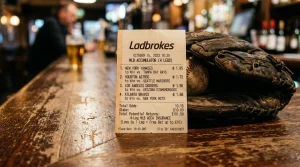

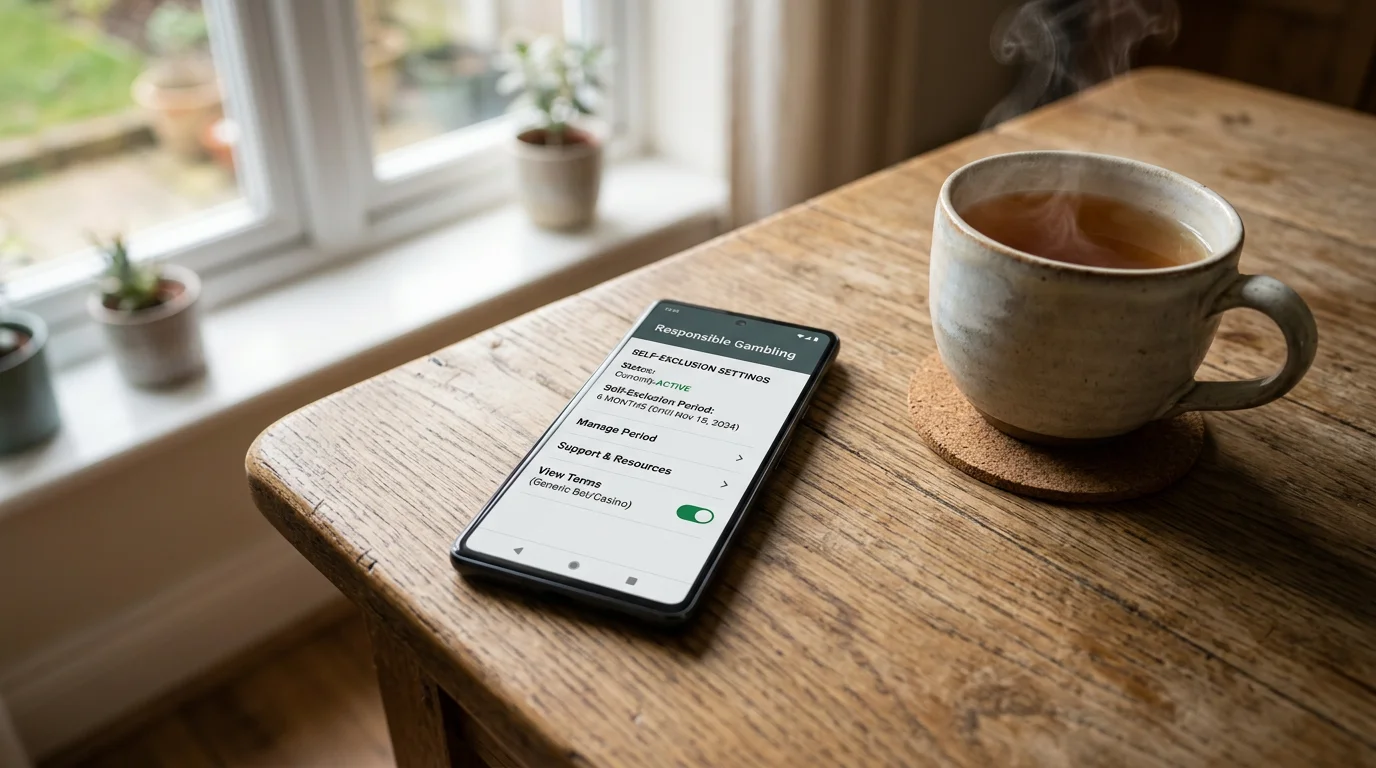
The honest part of nine years on this side of the betting industry is acknowledging that the same skills that make a person a good MLB punter can also make them a problematic one. Pattern recognition, comfort with variance, willingness to stake on a single binary outcome: those traits cut both ways. The UK regulatory framework around self-exclusion exists precisely because that double-edge is recognised, and any baseball bettor reading this guide should know how the tools work before they need them rather than after.
This is not a moralising essay. It is a practical walkthrough of GAMSTOP, deposit limits, time-out functions and reality checks, written for the UK MLB punter who wants to understand what they have access to and how to use it.
What GAMSTOP Blocks and Doesn’t
GAMSTOP is the UK’s national self-exclusion register. A single registration covers every UKGC-licensed online gambling operator simultaneously. You sign up once, choose an exclusion period of six months, one year or five years, and during that period no UKGC-licensed sportsbook will accept your account opening or login attempt. The cross-operator scope is what distinguishes GAMSTOP from operator-specific self-exclusion: it removes the ability to switch from Bet365 to William Hill mid-relapse.
What GAMSTOP does not cover is offshore, non-UKGC sportsbooks. Those sites are outside the UK regulatory perimeter and not connected to the GAMSTOP database. A bettor who self-excludes via GAMSTOP and then opens an account at a Curacao-licensed MLB sportsbook has effectively defeated their own protection. The honest framing is that the protection works only as far as you commit to staying inside the regulated UK market, and that commitment is part of the point.
The scale of the affected population is meaningful. UKGC participation data shows roughly 4.31 percent of UK gambling accounts are subject to some form of restricted-status, which includes GAMSTOP registrations, operator self-exclusions and other intervention flags. That is hundreds of thousands of people across the regulated market, and the infrastructure handling that volume is integrated tightly with how every UK sportsbook checks its login attempts.
Deposit, Loss and Time Limits
The lighter-touch tools are the ones I think every MLB punter should use proactively, not as a response to a problem. Deposit limits, loss limits and time limits are configurable inside every UKGC-licensed sportsbook account, and setting them at the start of every season takes about three minutes per operator.
The deposit limit is the cap on how much you can fund your account in a daily, weekly or monthly window. The loss limit is the cap on net losses across that window. The time limit is the cap on hours-of-play. All three are operator-specific, meaning a £200 weekly deposit cap at Bet365 does not apply at William Hill. UKGC participation surveys have measured roughly 22.5 million regular gamblers across the UK, with overall participation at around 48 percent of adults, and the deposit-limit feature is used by a much smaller fraction of that base than its protective value would suggest.
The behavioural argument for setting limits is not about predicting a problem. It is about decoupling your future stakes from your live emotional state. The version of you setting a £500 monthly cap in February is not the version of you down £600 on a bullpen meltdown in July, and the February version’s judgment is the one you should let bind the July version’s choices.
Reality Checks and Time-Out
The reality-check function is mandatory under UKGC conditions on every UKGC-licensed sportsbook. After a configurable interval (15, 30, 60 or 90 minutes), the operator interrupts your session with a pop-up showing how long you have been logged in and how much you have wagered. You then choose whether to continue.
I treat reality checks as a small but real piece of session discipline. They break the trance state that builds up when you are watching MLB live in-play and refreshing the bet slip every half-inning. The 30-minute interval is the setting I have personally landed on. Long enough to not interrupt a single in-play game flow constantly, short enough to break a multi-game spiral before it goes too far.
Time-out is the next tool up. A time-out is a short-term operator-specific suspension: 24 hours, 48 hours, one week, one month. Useful as a circuit-breaker when you have had a bad night and want to stop yourself logging back in before sleep clears the head. The time-out automatically lifts at the end of the period; you do not need to do anything to reactivate.
Triggers Specific to MLB Betting
MLB betting carries some structural triggers that football and horse racing do not. The schedule density is the most obvious. A baseball season is 162 games per club, six or seven games per night across the league, with daily action from late March through to early October. There is always another game to chase a loss on. The daily availability is not a problem in itself, but combined with live in-play markets that update on every pitch, the surface area for sustained session length is large.
Late-night UK MLB sessions are particularly worth flagging. West Coast first pitches at 3:00am UK time, twelve-inning games rolling into 7:00am. The combination of fatigue, alcohol and the cumulative effect of an in-play session that started seven hours earlier is exactly the spot where reality-check intervals and time-out functions earn their keep. I have lost more money on 5:00am MLB micro-bets across nine seasons than I ever lost on pre-game stakes, and the responsible-betting framework integrates with the broader principles covered in the responsible live betting framework.
The other MLB-specific trigger is the futures market. World Series outright stakes are emotional commitments stretched over six months. The temptation to top up the position when a club gets hot is a particular kind of compulsion that pure-game betting does not produce in quite the same way. Setting a futures-specific deposit cap separate from your in-play cap is one practical way to manage it.
Where to Get Help in the UK
The UK has more support infrastructure for problem gambling than most countries: GamCare runs a 24-hour National Gambling Helpline, BeGambleAware provides free counselling routes, and the NHS Northern Gambling Service operates specialist clinics. All are free and confidential. None of them require a referral. If a UK MLB punter is questioning whether their betting has crossed a line, those services exist for that exact moment, and using them is a strength signal rather than a weakness one. The earlier the conversation, the cheaper it is for everyone.
Does GAMSTOP cover offshore MLB sportsbooks?
Are MLB live in-play sessions linked to higher self-exclusion sign-ups?
Material created by the team StitchLine