


Baseball Betting Websites in the UK: 2026 Punter's Guide to MLB, NPB and KBO
The first time I tried to price an MLB game from a London desk, my model spat out a fair line of 1.74 on the Cardinals and the only UK book showing the fixture quoted 1.83. Nine years of run-line modelling later, that gap is exactly why baseball betting still rewards a UK punter who treats it as a serious sport rather than a curiosity tucked under "American sports" in the menu.
What I want from this guide is straightforward. You walk away knowing which kinds of operators in the United Kingdom carry the depth of MLB markets you actually need, how the basic bet types behave in a sport where the run line is the spread and a one-run game is statistically the rule rather than the exception, and what to make of the regulatory shifts that hit both sides of the Atlantic in late 2025. The market is real. The Gambling Commission's most recent industry numbers put British gross gambling yield at 16.8 billion pounds across the 2024 to 2025 financial year, growing 7.3% in twelve months. UK sports betting alone is forecast to climb from roughly 11.2 billion dollars in 2024 to 21.3 billion dollars by 2030, an 11.4% compound rate. MLB itself drew 71.4 million spectators in 2025, the third year of attendance growth in a row — the first time the league has managed that since 2007.
You will not find a numbered list of "best" sportsbooks here. I refuse to rank licensed UK operators against each other in a way that pretends my preferences are yours. What you will find is a working punter's view of how to operate in the UK baseball market without doing anything embarrassing, expensive or — worse — illegal.
UK gambling GGY
16.8 billion pounds in 2024 to 2025
2025 MLB attendance
71.4 million across the regular season
UKGC requirement
Every operator serving Great Britain must hold a Gambling Commission licence
Last reviewed
$$CURRENT_DATE$$
Quick Read: What UK Baseball Bettors Need to Know in 2026
- The only operator test that matters in the UK is the Gambling Commission licence — a remote sportsbook without one cannot legally take your stake, and the 25% Remote Betting and Gaming Duty arriving in April 2027 will reshape pricing across every UK book that holds one.
- The MLB run line sits at plus or minus 1.5 because almost a third of all regular-season games are decided by a single run, which is why the spread punishes lazy moneyline favourites every week.
- Pitch-level prop bets are now capped at 200 dollars per stake and excluded from parlays at sportsbooks covering 98% of the US market, a direct response to the Clase and Ortiz integrity case.
- Both the Korean KBO and Japanese NPB play in UK-friendly daytime windows, giving you a working baseball card before MLB's first pitch.
The UK Regulator Sets the Rules, Not the Bookmaker
Andrew Rhodes, who runs the Gambling Commission, called Britain "the largest regulated online gambling market in the world" with a gross value north of 15 billion pounds and 22.5 million adults engaging on a regular basis. He was, if anything, being modest. The actual figure for 2024 to 2025 is 16.8 billion in gross gambling yield, and the gap between his speech and the reality tells you something about the pace at which this market moves. As a UK baseball bettor, the only operator test that genuinely matters is whether the sportsbook holds a Gambling Commission licence — and the consequences of betting at one that does not.
Strip everything else away. Welcome offers, app polish, the breadth of MLB futures, the dot on the live tennis page promising you in-play handball — all secondary to the licence question. A UKGC-licensed operator must hold customer funds segregated, must publish dispute escalation paths through the Independent Betting Adjudication Service, must run age and identity verification before your first stake clears, and must comply with the Commission's social responsibility code. Offshore books that show up in Google ads, especially the ones that lean heavily on crypto deposits, are operating outside that perimeter. Between October 2024 and September 2025 alone, the Commission sent 806 cease-and-desist letters and pushed 314 unlicensed sites into geo-block. That is the scale of the unregulated market trying to scrape UK customers off the surface.

How to verify a UKGC licence in 30 seconds
Every licensed operator must publish its Gambling Commission account number in the footer of its website. Type that number into the public register on the Commission's own site and you will see the company name, the licence type, the date the licence was granted, and any open compliance actions. If a footer shows a licence from Curacao, Malta, Gibraltar or the Isle of Man without a separate UK Gambling Commission entry, the site cannot legally serve a Great Britain resident.
Tax is the part most punters get wrong, and the part most likely to change. Bookmaker winnings are not taxable income for the customer in the United Kingdom. The duty is paid by the operator. General Betting Duty brought in 714 million pounds across the 2024 to 2025 financial year, and the Treasury's combined betting and gaming receipts for April through August 2025 to 2026 hit 1.786 billion pounds, up 9% year on year. From April 2027, the new Remote Betting and Gaming Duty rises to 25%, while horse racing keeps its 15% rate as a carve-out. That spread will quietly squeeze MLB pricing — UK operators will have to absorb or pass on the duty, and a sport that already runs on thin margins is the obvious place to clip a half-point off the price you see on a moneyline.
If a sportsbook's footer does not show a UK Gambling Commission account number, walk away. No promotion, no enhanced price, no "instant withdrawal" claim is worth playing outside the regulatory perimeter — your deposit is not segregated, your dispute path goes nowhere, and a future government clampdown can lock the site overnight.
The Quiet Truth About How Many Brits Actually Care
An American visitor once asked me, sincerely, how I made a living betting on a sport "no one in the UK watches." He had a point and he did not. Nielsen's SportsDNA tracker has put MLB interest among UK adults aged 16 to 69 at a stable 8% for years now. Compared with Japan's 42% and Mexico's 24%, that looks underwhelming. In raw numbers, though, 8% of the relevant UK population is several million people, and the audience that does engage tends to engage hard.
The London Series is the cleanest evidence. When the Cubs and Cardinals played at the Olympic Stadium in 2023, 71% of attendees were UK residents — not American expats on a working-week jaunt to Hyde Park. MLB's UK social audience grew 133% in the surrounding period, and merchandise sales rose 43%. The 2019 edition pre-sold 120,000 tickets in under an hour. None of these are tourism numbers. They are the signature of a domestic fanbase that already exists and that the operators serving the UK undercount in their market depth.
| Country | MLB interest, adults 16 to 69 | Practical implication for UK punters |
|---|---|---|
| United Kingdom | 8% | Smaller pools, thinner liquidity, but priced by UK trading desks who often miss US sharp moves |
| Japan | 42% | Far deeper NPB markets at home; UK books carry secondary NPB lines with high overround |
| Mexico | 24% | Strong winter ball culture; UK exposure mostly limited to WBC and Caribbean Series |
The participation side is more modest still. Roughly 22,500 people were playing organised baseball in Britain in 2020, served by more than 100 registered clubs and 75 university teams across 35 universities. The British Baseball Federation rejoined BaseballSoftballUK as a member in February 2025 after a five-year stand-off, which sounds bureaucratic but matters because it puts national-team programmes back inside a single governing structure. The World Baseball Softball Confederation, which sanctions tournaments your bookmaker will eventually price, counts 208 national federations across 141 countries, around 65 million players, and roughly 150 million stadium fans annually. None of that gets onto a UK punter's radar in a normal week, and that is the part to watch.
The 2019 London Series sold its full 120,000-ticket allocation in less than an hour. For context, that is faster than most Premier League finals at Wembley clear in the public sale window — for a sport British media still occasionally treat as a novelty.
The Operator Landscape, Without the League Table
Every "best UK MLB site" article you have ever read shares one trick. Author picks five operators, ranks them one through five, and the winner suspiciously matches whoever paid the highest commission that quarter. I am not going to do that here. The market is too thin and the variation between operators on any given MLB Tuesday too large to make a static ranking honest.

The shape of the market is straightforward. Across the largest UK remote-betting operators, average monthly active accounts sat at 13.5 million in the first quarter of the 2025 to 2026 financial year, up 2% year on year. Within that pool, the names that consistently carry MLB with usable depth — moneyline, run line, total, first-five-innings, alternate run lines, pitcher strikeout props and live markets — are familiar to anyone who has bet on football or horses in Britain. Bet365, William Hill, Betfair Exchange, Paddy Power, Ladbrokes, Coral, Sky Bet and BoyleSports all hold UKGC licences and all carry MLB to varying degrees. Some lean heavily into futures and outrights. Others go thicker on in-play. None of them are equally good at every market type. For a head-to-head breakdown of how each one handles MLB specifically, see full UK MLB bookmaker reviews.
What you should be testing for is unrelated to the front-of-page promotion. The questions worth asking are these. Does the operator price every starting nine MLB game from Opening Day to the World Series, or does it skip mid-week afternoon fixtures? Does its run-line market quote alternates at plus 2.5 and minus 2.5, or only the standard plus or minus 1.5? How quickly does it reprice after a starting pitcher scratch — within minutes, or only after the lineup card lands? Are pitcher strikeout totals offered for both starters in every game, or just the marquee names? Does the live page hold price during a 2-2 count, or freeze for forty seconds while the trader catches up?
What an MLB-serious UK sportsbook actually carries
Treat this as a bare-minimum checklist for any operator you trust to take your run-line stakes. Full game moneyline, run line at plus or minus 1.5, alternate run lines at 2.5, total runs and alternate totals, first five innings result and total, NRFI and YRFI markets for every game, pitcher strikeout over and under for both starters, batter total bases and home-run props for everyday names, and a live page that suspends — rather than freezes — between pitches.
Bill Miller, who runs the American Gaming Association, has been making the same argument about regulated markets for several years now and he is broadly right. The 2025 US handle of 166.94 billion dollars and operator revenue of 16.96 billion — up 22.8% on 2024 — exists because consumers, in his framing, are protected and communities share in the benefits. The UK version of that argument is simpler. Customer funds are segregated. Disputes have a published path. Tax revenue funds public budgets. None of those things hold for an offshore site dressed up to look UK-native.
One last thing. The 4.31% commercial-restriction rate I will return to in a later section is the operator landscape's open secret. Every name listed above will, given enough winning history, restrict your stakes. That is not a reason to avoid them. It is a reason to keep an account at more than one.
What the MLB Bet Slip Actually Looks Like
Here is a truth I did not appreciate until I had been pricing baseball for about three years. The reason MLB has its own betting language — run line instead of spread, first five instead of half-time, NRFI instead of half-time goal — is not affectation. It is because the underlying probability shape of the sport is different from football and basketball, and the markets evolved to fit it. Almost a third of MLB games are decided by exactly one run, which is the single fact every UK punter needs holding in their head before they place a stake.
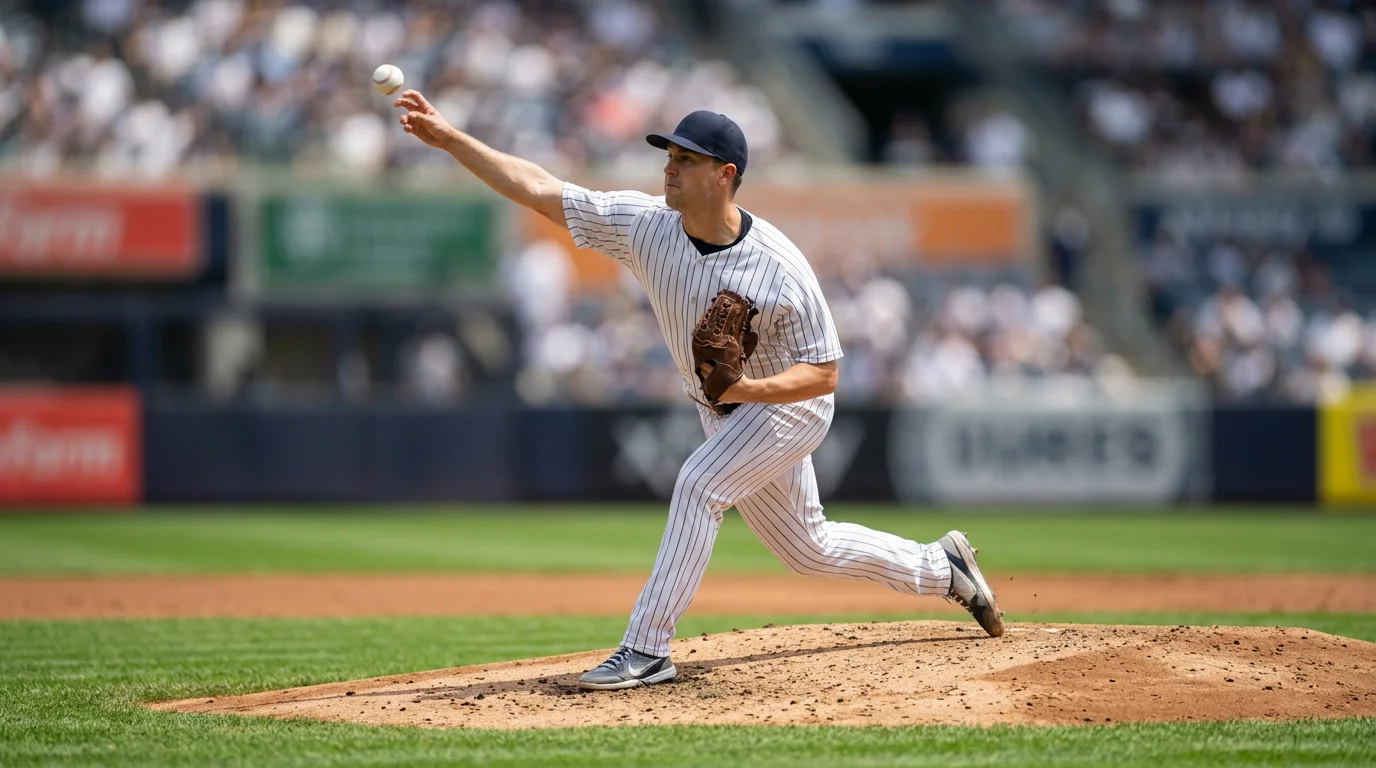
The moneyline is the simplest market and also the trap. It asks who wins, full stop, and pays whatever decimal price reflects the implied probability plus the operator's overround. UK books quote it in decimals; you will see lines like 1.62 on a heavy home favourite and 2.50 on the underdog. The trap is that MLB favourites, especially short-priced home favourites, lose far more often than the equivalent priced football or basketball favourite. A 1.50 baseball favourite is not the same animal as a 1.50 horse-racing favourite.
A worked moneyline and run-line example, no real teams
Home side 1.65 to win the game outright. Away side 2.30. The home team's run line at minus 1.5 prices around 2.20, and the away team at plus 1.5 around 1.70. If your model says the home team wins 60% of the time but only by two or more runs in 38% of games, the moneyline at 1.65 looks slightly long while the minus 1.5 run line at 2.20 looks shorter than fair value.
The run line is MLB's version of the handicap. It almost always sits at plus or minus 1.5, because of that one-run-game frequency, and it is where the sharper money tends to land. Backing the favourite at minus 1.5 means they need to win by at least two; backing the dog at plus 1.5 means they can lose by one and you still get paid. Alternate run lines at 2.5 exist for both sides at most major UK operators, and that is where genuinely informed bettors find their leverage on heavy favourites against rebuilding bullpens.
Run line — the standard MLB spread market, almost always set at plus or minus 1.5 runs because roughly 30% of games end with a one-run margin. The favourite at minus 1.5 wins the bet only by winning by two or more.
NRFI — short for "no run first inning." A market that pays out if neither team scores in the top or bottom of the first. Its mirror, YRFI, pays if either team scores. Pricing is driven almost entirely by the two starting pitchers' first-inning history.
Totals — over and under on the combined runs scored — work similarly to football, except that the median MLB total in 2025 sat between 8 and 9 runs depending on park, and small movements in the line carry larger implications because of how scoring is distributed. Props divide into team props (will the Yankees score in the first?) and player props (will the starter record over 6.5 strikeouts?). Pitcher strikeout props are where most of the live betting volume now lives and where the November 2025 micro-bet rules I cover later have changed the structural picture for everyone. Futures and outrights — World Series winner, division winner, individual MVP — sit on the bet slip too, with the longest UK ante-post books opening lines as early as November of the prior year. For the full structural breakdown, including derivative innings markets and bet builders, work through every MLB market explained.
Strategy Is Mostly Patience Disguised as Maths
Ask a recreational MLB punter what their edge is and they will usually mention a starting pitcher they like. Ask a profitable one and they will tell you about closing line value, sample size, and how long it takes a 162-game schedule to expose a flawed model. The gap between those two answers is the gap between losing money over a season and breaking even or better. There is no version of this where casual play and statistical edge live in the same head, and the sooner you accept that, the cheaper your education becomes.
The baseline of any usable approach is value, not winners. A bet at 2.10 that wins 50% of the time is profitable forever, while a bet at 1.50 that wins 60% of the time is profitable forever, and a bet at 1.50 that wins 65% of the time is essentially a part-time job. Picking winners alone is not the game. Pricing them better than the operator is. UK books typically run an overround of 4 to 6% on moneyline pairs and slightly more on run lines. Your edge has to clear that hurdle before anything else.
Closing Line Value — the difference between the price you took and the price the market settled at just before first pitch. Consistent positive CLV over hundreds of bets is the strongest single indicator that a punter is actually beating the market rather than running hot.
The four levers I think about, in roughly this order, are pitcher matchup quality, lineup construction against handedness, park factor, and weather. Starting pitcher dominates because a single arm can absorb 60% of an MLB team's run prevention on any given night. Lineup splits — left-handed batters facing left-handed starters, for example — bend the price marginally but consistently. Park factors, the multipliers that adjust how runs play in Coors Field versus Petco, are the slowest-moving of the four and the easiest for the operators to misprice in alternate-totals markets. Weather, especially wind direction at outdoor parks, finishes the picture.
The 2025 MLB regular season produced seven players who hit 30 home runs and stole 30 bases — the most 30-30 seasons in any single MLB year on record. The previous high had stood since 1987. Statistical extremes like that are precisely the kind of small-sample event most futures markets fail to incorporate fast enough.
Bankroll discipline is unglamorous and non-negotiable. A flat-stake approach — say, 1% of bankroll on each bet, regardless of perceived edge — outperforms most "Kelly-inspired" creative staking that recreational punters dream up. Variance over 162 games is brutal. A 55% win rate at evens can swing 20 bets above or below expectation across a single month and still be the genuine long-run number. None of this is romantic. It is, however, the difference between making it to August and rage-quitting in May. The deeper sabermetric and modelling layer — FIP, xFIP, wOBA, BABIP, regression-to-mean, public-fade signals and CLV tracking — is the territory of advanced MLB betting strategy, and it pays back in patience what it costs in study time.
The Stream and the Bet Are Not the Same Clock
A friend of mine spent three innings cursing his sportsbook last August because every time he tried to back a tied game's "next half-inning total over 1.5," the price had moved by the time his bet cleared. He thought the book was cheating him. It was not. His Bet365 stream was running about eight seconds behind real time, and the in-play traders were watching the same MLB.TV broadcast he was. The lesson, which I will repeat in three different ways before the end of this section, is that live MLB betting from the UK is not a contest between you and the operator. It is a contest between your latency and theirs, and theirs is almost always lower.
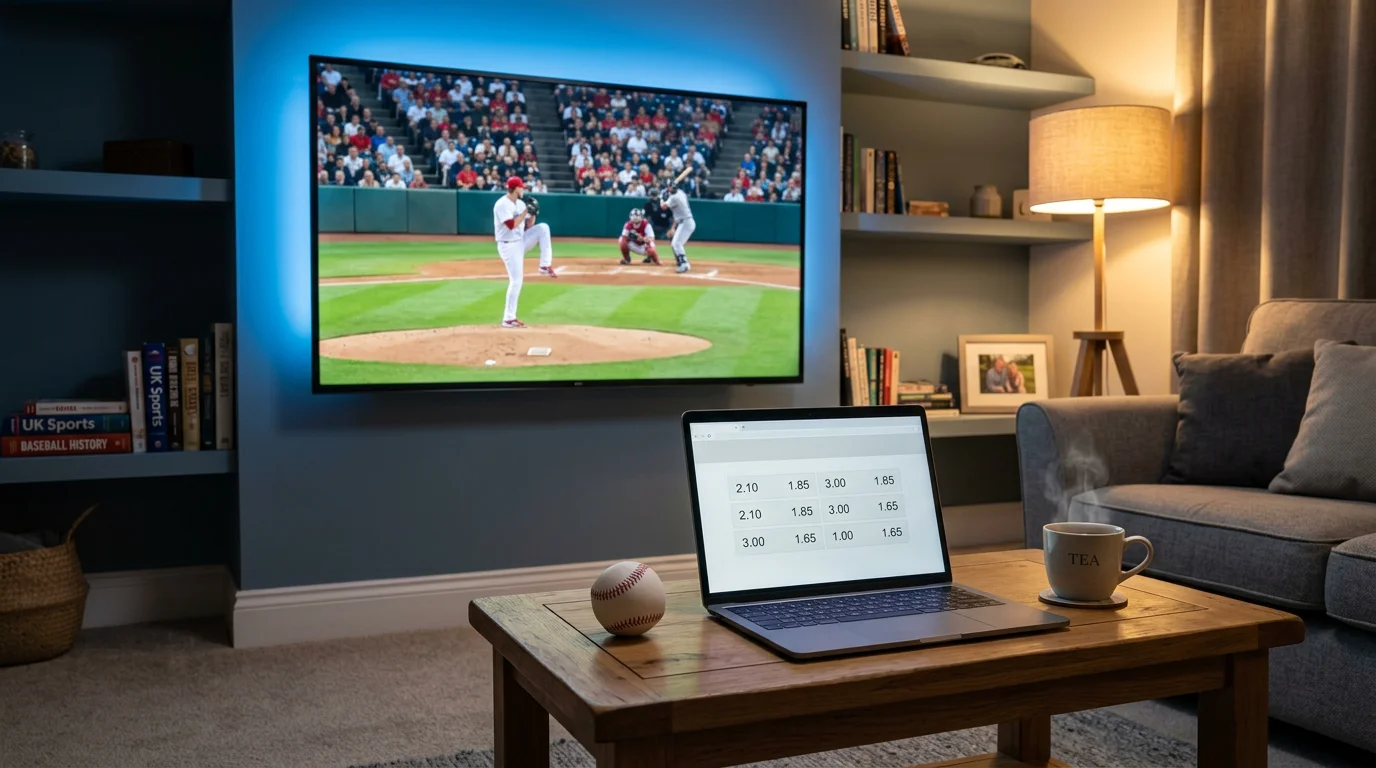
MLB.TV recorded 19.39 billion total viewing minutes during the 2025 season, up 34% on 2024, which tells you how widely the league's own streaming product has displaced traditional broadcast. UK punters typically reach in-play markets through one of three routes — the operator's embedded stream (usually a delayed feed of the international broadcast), MLB.TV with a UK subscription, or BT Sport / TNT Sports highlights packages on selected primetime games. Each route carries a different lag profile. Operator-embedded streams sit anywhere between five and twenty seconds behind the trader's source feed. MLB.TV is closer to live but still trails the venue camera by three to seven seconds. The trader's data feed runs almost in real time.
How fast a UK book actually pays out, in numbers
Of 44.2 million withdrawals processed by major UK operators between June and September 2024, 96.3% were handled automatically, 3.5% landed within 24 hours, and only 0.1% took longer than 48 hours. Treat anything outside that pattern — a "manual review" stuck for three days, a "verification" demand on your fifth withdrawal — as a flag. UK-licensed sportsbooks are held to the Gambling Commission's payments standards, and slow withdrawal is one of the cleaner indicators of an operator stretching them.
Cash out is the other live mechanic worth understanding. Operators offer it on most pre-match bets that are still in play, and the price they quote is always shaved against true fair value — typically 3 to 6%. Partial cash out, where you take some of your stake back and leave the rest running, is a slightly better deal than full cash out on a winning run-line position because it lets you bank a portion of the variance without surrendering the full edge of holding to settlement.
What I genuinely want you to take from this section is that live MLB betting rewards discipline more than reaction speed. The operator is faster than you. Build your live strategy around scenarios you can predict from the pre-match data, not reflex bets on a count you saw two seconds ago. The full mechanics — latency profiles, partial cash out maths, in-play market types and the responsible-play angle — sit inside the live MLB betting and streaming guide.
NPB and KBO Are Not the Consolation Prize
Three years ago I almost stopped betting Korean baseball because the lines moved so fast that by the time I clicked confirm, the price had already gone. That is no longer true. KBO and NPB are now priced thickly enough by the major UK operators to support a working strategy, and their schedule is genuinely useful for British punters because both leagues play in UK-friendly daytime windows. KBO weekday games typically start at around 10am UK time, NPB at 10am or 11am UK time depending on stadium, and both leagues run a long enough season — KBO 144 games, NPB 143 — to give a working punter a usable card before MLB's first pitch lands at midnight or later.

Why these leagues matter, beyond convenience, is partly the maths and partly the pricing inefficiency. UK trading desks know MLB cold. They handle KBO and NPB with thinner specialists, and that creates real pricing gaps in moneyline and totals markets, especially during the parts of the season — early spring, late autumn — when an MLB-trained desk is not yet fully attentive to the Asian schedule. The World Baseball Softball Confederation, which sanctions WBC qualifiers, the Premier12 and the Caribbean Series, counts 208 national federations and roughly 65 million registered athletes worldwide. The supply of bettable international baseball is much wider than the UK operators' menus suggest.
| Characteristic | MLB | NPB (Japan) | KBO (Korea) |
|---|---|---|---|
| Regular season length | 162 games per team | 143 games per team | 144 games per team |
| Typical UK kick-off window | 11.30pm to 4am | 10am to 1pm | 10am to 1pm |
| UK book market depth | Deep — every mainstream market priced | Moderate — moneyline, run line, total, key props | Moderate — moneyline, total, occasional run line |
| Run-environment notes | Park-driven, average game roughly 8 to 9 runs | Lower-scoring than MLB, average closer to 7 runs | Higher-scoring, average closer to 10 runs in modern era |
| Typical UK overround | 4 to 6% on moneyline pairs | 5 to 8% on moneyline pairs | 5 to 9% on moneyline pairs |
The UK domestic angle is the London Series, which MLB has confirmed as a recurring fixture into the 2026 calendar and almost certainly beyond. UK Nielsen interest in MLB has held at 8% of adults aged 16 to 69 — modest in proportion, several million people in absolute terms — and the audience reaches the highest engagement levels around London Series weekends. WBC and the Caribbean Series complete the international card; both are now standard offerings at UKGC-licensed sportsbooks during their windows.
The strategic implication is simple. If you treat NPB and KBO as a thin menu of weekend specials, you are missing roughly 40% of the bettable baseball year. If you treat them as a serious extension of your MLB workflow — same model adjustments, same closing-line tracking, same bankroll rules — they are some of the more reliably mispriced sports markets a UK punter can access. The full season-by-season breakdown sits inside the betting on NPB, KBO and the London Series guide.
The 2026 Calendar a UK Punter Should Have Pinned
I keep a printed calendar above my desk for one reason. The MLB regular season starts on a Thursday in late March, runs through a postseason that ends in early November, and absolutely nothing about that schedule is intuitive to a brain trained on football. If you do not pre-stage your bankroll and your account funding around it, you will overpay for futures in February when the value has already left the market, and you will miss the first ten days of meaningful regular-season pricing while you are still verifying a new payment method.
2025 set the bar high. Regular-season attendance hit 71.4 million, a third consecutive year of growth, and World Series Game 1 between the Blue Jays and Dodgers averaged 32.6 million viewers across the United States, Canada and Japan combined — the largest combined audience for any World Series game since 2016. Those are MLB's tailwind numbers heading into 2026, and they translate directly into thicker UK liquidity around postseason markets.
Five things to verify before each major MLB event in 2026
- Operator's stated MLB market depth for the specific event — not all UK books expand props for the All-Star Game or London Series at the same rate they cover regular-season Tuesdays.
- Whether ante-post stakes are settled on listed pitchers only or "action" — the difference matters when a starter is scratched on game-day morning.
- Live streaming entitlement on your account for the specific fixture, since some operators rotate streaming rights between leagues by date.
- Withdrawal limits and processing windows during postseason peaks, when even compliant UK operators see queues stretch past 24 hours.
- Any micro-bet exclusions on parlays involving pitcher strikeout or pitch-level props after the November 2025 changes — your slip may quietly drop a leg without a warning.
The fixed points to pin are these. Opening Day in late March, the London Series in late June, the All-Star Game on the second Tuesday of July, the trade deadline on 31 July, postseason from late September into early November, and World Series in late October running into the first week of November. Around each of those, UK books expand market menus, run promotional pricing and — critically — open more in-play streams than they do in routine August fixtures. Plan your year backwards from World Series, not forwards from spring training.
How a Cleveland Closer Changed the UK Bet Slip
If you had asked me in October 2025 which scandal would reshape the structural rules of MLB betting before the year was out, I would not have said pitch-level props on a Cleveland reliever. The Clase and Ortiz indictment, filed by the Eastern District of New York in November 2025, alleged that gamblers in the Dominican Republic netted somewhere between 450,000 and 460,000 dollars by exploiting prop markets on whether specific pitches would be balls or strikes. The scheme itself was small in dollar terms by the standards of US sports-betting controversies. The regulatory response was not.
MLB's response, announced in the same month, was a cap of 200 dollars per stake on pitch-level prop bets and the wholesale exclusion of those bets from parlays. The agreement covers operators representing roughly 98% of the US sports-betting market — the named partners include Bet365 and the major US books, which is why the UK side of the rule matters even though the indictment was a US case. Rob Manfred has been clean about why. He calls the bedrock of MLB's relationship with sportsbooks the ability to monitor betting activity and to discern inappropriate patterns, and the micro-bet cap is a structural answer to a structural vulnerability rather than a punishment.
UK punters are not exempt. UKGC-licensed operators that are also signatories to MLB's monitoring and integrity agreements apply the 200-dollar pitch-prop cap and the parlay-exclusion rule to UK accounts. If your bet builder rejects a pitch-level leg without an obvious reason, this is the cause. The micro-bet rule is not a UK-specific imposition — it is a global operator commitment that happens to bind on you.
The wider US political response told you the rule was coming whether MLB wrote it or not. Senators Ted Cruz and Maria Cantwell wrote to Manfred warning that "an isolated incident of game rigging might be dismissed as an aberration, but the emergence of manipulation across multiple leagues suggests a deeper, systemic vulnerability." Ohio Governor Mike DeWine urged other leagues to follow MLB's example. The signal was unambiguous — leagues that did not voluntarily restrict micro-prop markets would have those restrictions written for them by state legislators.
What this means in practice for a UK baseball bettor is mostly invisible. Pitch-by-pitch live betting is now structurally smaller. Pitcher strikeout totals, batter total bases and home-run props remain unaffected. Pitch-level legs cannot be combined into accumulators, which removes a category of high-margin parlays from the menu but also removes a category of bets that delivered very little real edge to anyone outside the people allegedly cheating. The cap, in my read, is one of the few regulatory interventions in betting markets where the punter loses essentially nothing of value and the integrity gain is genuine.
The Part of This Guide That Actually Saves Money
I have watched two friends lose more money to MLB betting than they could afford and I should have said something earlier in both cases. The pattern is unglamorous. It starts with a hot streak, becomes daily action, ends with chasing losses on weeknight fixtures neither of them would have looked at sober. The Gambling Commission's most recent participation data puts roughly 48% of UK adults engaging in some form of gambling, with 22.5 million people gambling regularly. Inside that population, the operators commercially restrict 4.31% of online accounts in any given twelve-month window — a non-trivial fraction of the people who are winning enough to be flagged.
The flip side is the part the operators do not advertise as loudly. The same Commission data shows that the slowest-moving harms cluster among customers using offshore or unlicensed sites, where deposits are not segregated and dispute paths effectively do not exist. As Andrew Rhodes put it, "there is nothing more exploitative than the illegal market." If you find yourself drifting toward an offshore operator because a UK book has restricted your stakes, that drift is itself the problem worth flagging, regardless of whether the underlying betting pattern is healthy.
UK self-exclusion is structurally different from anywhere else in the regulated world. GAMSTOP is the central, UKGC-mandated programme that blocks your access to every UK-licensed online operator simultaneously for six months, one year or five years. Account-level limits — deposit caps, loss caps, time-spent prompts — are required tools at every UKGC operator. None of these are surrender. They are the same instruments a serious punter uses to enforce bankroll discipline before discipline becomes a crisis.
The discipline question I ask myself every season is whether my MLB betting is still answering to a model or whether it has quietly become entertainment with a stake attached. The honest answer dictates everything else. Sustainable baseball betting and recreational baseball betting are not the same activity, and the failure mode is treating them as if they are. If you cannot tell which one you are doing on any given Tuesday in July, that is the moment to take an enforced break — not after the loss that finally focuses you.
Common Questions From UK Baseball Punters
Is betting on Major League Baseball legal in the United Kingdom?
Yes, with the same condition that applies to every other sport. The operator you bet through must hold a UK Gambling Commission licence, which you can verify by typing the licence number from the operator's footer into the Commission's public register. UK customers do not pay tax on winnings — duty is paid by the operator, with General Betting Duty raising 714 million pounds across the 2024 to 2025 financial year. Betting through an offshore site without a UKGC licence is not protected by UK consumer law, regardless of how legitimate the site appears. The licence is the test, not the brand name.
Which UK bookmakers cover Major League Baseball in depth?
The UKGC-licensed operators that consistently price MLB beyond the headline moneyline market include Bet365, William Hill, Betfair Exchange, Paddy Power, Ladbrokes, Coral, Sky Bet and BoyleSports. None of them are equally good across every market type — some are stronger on futures, others on live and pitcher props. The functional test is whether an operator quotes alternate run lines at plus or minus 2.5, prices both starters' strikeout totals, runs NRFI and YRFI for every game, and reprices quickly after a starter scratch. If a book skips mid-week afternoon fixtures from its menu altogether, treat that as a signal it is not serious about the sport.
How does run-line betting differ from a moneyline in baseball?
A moneyline bet asks who wins the game, full stop, at a decimal price. A run-line bet adds a 1.5-run handicap to one side and a corresponding plus 1.5-run head start to the other, in almost every MLB game. The favourite at minus 1.5 wins the bet only by winning by two runs or more; the underdog at plus 1.5 wins the bet by winning outright or losing by exactly one run. The handicap exists at 1.5 specifically because around 30% of MLB games end with a one-run margin — the most common outcome by some distance.
Can I stream live MLB games while betting from the UK?
Yes, through three main routes. UK-licensed operators including Bet365 and Sky Bet embed live MLB streams within the in-play page, typically requiring either an active stake on the fixture or a funded account in the previous 24 hours. MLB.TV sells a direct UK subscription with full league coverage, though it carries a regional blackout structure that varies by season. TNT Sports holds selected primetime games and postseason rights for the UK market. All three feeds carry latency — operator streams typically run five to twenty seconds behind the trader's source feed, which is a critical consideration for live betting strategy rather than a bug.
Why did MLB introduce a cap on pitch-level prop bets in November 2025, and what does it mean for me as a UK punter?
The cap was a direct response to the Clase and Ortiz indictment, in which gamblers allegedly netted around 460,000 dollars exploiting prop markets on whether specific pitches would be balls or strikes. MLB's agreement with operators representing roughly 98% of the US market caps individual pitch-level prop stakes at 200 dollars and excludes them from parlays. UKGC-licensed operators that are signatories — including Bet365 — apply the rule to UK accounts. In practical terms, your individual stake on a pitch-level prop is capped, and pitch-level legs can no longer be combined inside a bet builder. Standard pitcher strikeout, batter and team props are unaffected.
Are baseball betting winnings taxable for UK residents?
No. UK residents do not pay personal income tax on gambling winnings, including baseball-betting winnings, regardless of stake size or how often you bet. The duty falls on the operator. From 1 April 2027, the new Remote Betting and Gaming Duty rises to 25%, while horse racing keeps a separate 15% rate. That change is borne by the bookmaker, but expect it to be passed through into pricing — slightly wider overrounds, marginally lower headline prices on MLB markets — once the new rate beds in. Across the wider regulated US market, by way of context, the AGA reported handle of 166.94 billion dollars in 2025.
One thing the FAQ above does not cover
Account restriction. UK operators commercially restrict roughly 4.31% of accounts in any given year, almost always for sustained winning patterns rather than rule-breaking. There is no UKGC remedy for restriction itself — the operator is contractually entitled to refuse business — but you are entitled to a clear written explanation and to escalate withdrawal disputes through the Independent Betting Adjudication Service if your funds are held back.
What I'm Watching as the 2026 Season Opens
The thirteen sections above cover the architecture of UK baseball betting in 2026. What follows is what I would actually be doing about it if I were starting tomorrow.
Uzma Rawn Dowler, who runs MLB's marketing operation, said in October 2025 that "baseball is having a moment," and from a UK punter's seat that moment is genuinely useful. Thicker postseason audiences, deeper UK operator pricing, the London Series locked in as a recurring fixture, KBO and NPB now properly priced for the early-morning UK card. The structural backdrop of a 25% Remote Betting and Gaming Duty arriving in April 2027, the integrity-driven micro-bet cap, the steady decline of the unlicensed offshore alternative — all of these tighten the market in ways that, on net, favour the disciplined punter over the impulsive one.
The single thing I would tell my own self of nine years ago is this. Treat MLB as a long sport with a long season, not as a series of individual games. Track every bet's closing line value, not its outcome. Hold accounts at multiple UKGC-licensed operators because none of them are good at every market type. And accept that the operator with the slickest app is rarely the operator with the sharpest run-line pricing on a wet Tuesday in Cincinnati.
The UK baseball-betting market in 2026 rewards three habits above all others — verifying the UKGC licence before the first deposit, using closing line value as the only honest measure of skill across a long season, and treating NPB and KBO as a serious extension of MLB rather than a curiosity. Everything else, including which operator's badge sits on your bet slip, is secondary.