

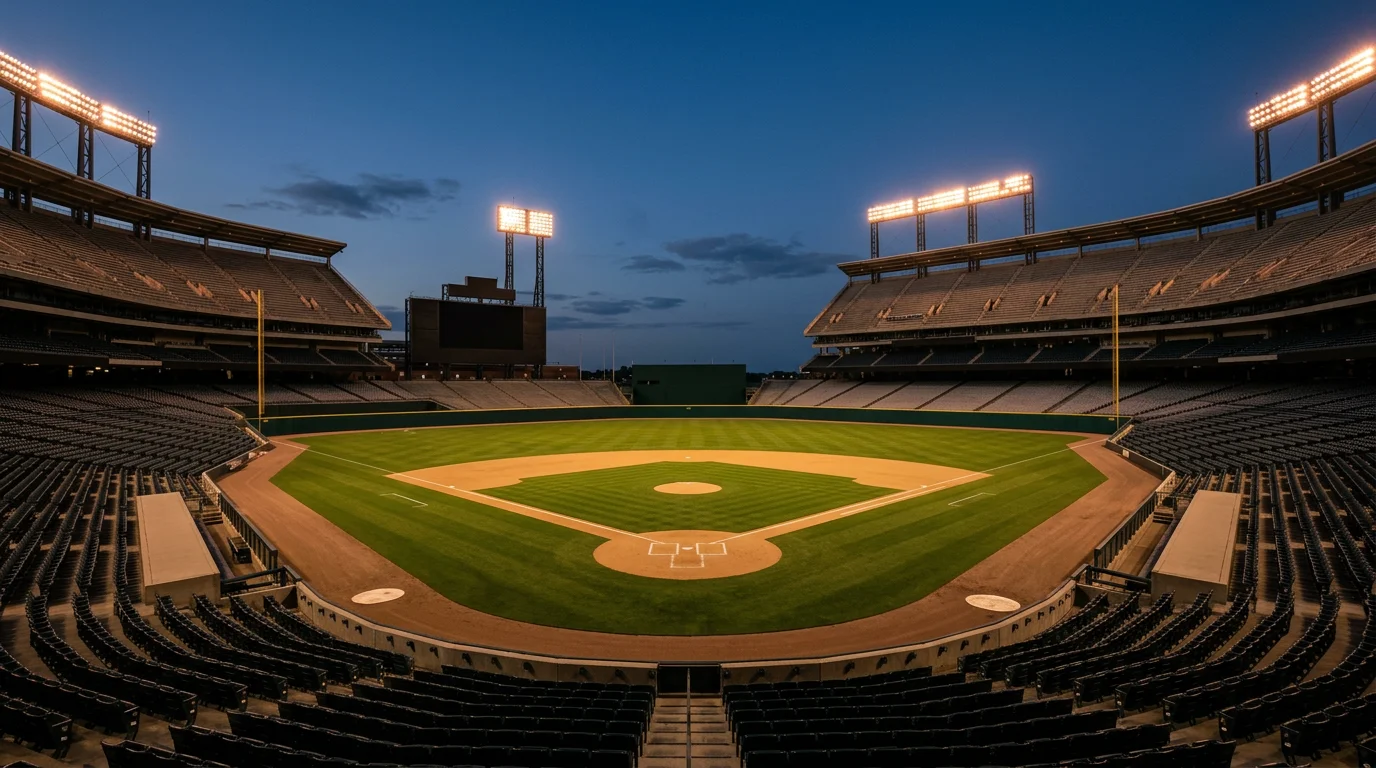
The single biggest unforced error I see new MLB punters make is treating every ballpark like the same neutral box. They will model a starting pitcher, weigh the bullpen, look at the lineup, and then plug everything into a run line as if Wrigley in a 16-mph crosswind plays the same as a domed Tropicana on a windless Wednesday. It does not. Park factor is the input that quietly corrupts everything else when ignored.
Nine seasons modelling MLB run lines has taught me that stadium effects are the cleanest, most stable edge in the sport. Pitching staffs change, lineups slump, but Coors Field is going to inflate offence in 2026 the same way it did in 2025. A UK punter who memorises how each ballpark distorts the run line gets a quiet repeatable advantage over the casual bettor pulling up Bet365 in a coffee shop.
This guide is the framework I use. Park factor as a concept, the four venues that matter most, and how to translate that into actual run-line and totals decisions on a UK card.
What Park Factors Actually Are
A park factor is a ratio. You take how a stadium scores compared to the league average across multiple seasons and you express it as an index where 100 is neutral. A 110 park inflates offence by 10 percent. A 92 park suppresses it by 8 percent. That sounds dry until you watch the same lineup score four runs at home and six on the road in the same week, and you realise the venue is doing real work on the scoreboard.
The first thing to know is that park factor is not one number. Sites like FanGraphs and Baseball Savant publish split factors for runs, home runs, doubles, triples and singles. A park can suppress home runs but boost doubles because of huge gaps in the outfield. The pitcher-friendly reputation of a place like Oakland Coliseum used to live almost entirely in foul ground and dimensions. Park factor for left-handed power can differ wildly from right-handed power in the same stadium.
The second thing is sample size. A single-season park factor is noisy. I lean on rolling three-year and five-year figures because that smooths out weather variance and lineup turnover. When a park factor moves more than five points year-over-year, that usually tells me something physical changed: new fence height, a humidor change, a roof staying open more often. Those are the moments where the market lags behind reality and a punter can take advantage.
For run-line work specifically, two factors matter most: the runs index and the standard deviation of innings totals at that venue. A 105 park where games rarely blow out is not the same betting environment as a 115 park where 3-2 and 12-7 alternate randomly. The first you can fade the run line on; the second you cannot.
Coors Field and the Altitude Effect
I keep a separate spreadsheet for Coors Field because it breaks the same models that work fine at the other 29 ballparks. Mile-high altitude reduces air density, which means fly balls carry further, breaking pitches break less, and outfielders cover ground that has somehow grown bigger overnight. The cumulative effect on a totals line in a Rockies home game is roughly two runs of inflation compared to a neutral park, and on a hot summer afternoon that figure can stretch to two and a half.
The temptation when betting Coors is to hammer the over. The market knows this. Total lines sit at 11.5, 12, sometimes 12.5 in July, and the easy edge has been baked in for years. Where I find value instead is the run line. A favourite at -1.5 in Denver is fundamentally different from a -1.5 favourite in San Diego because the variance on a single inning is so much wider. I am much more willing to lay 1.5 runs at Coors with a pitching staff that misses bats, because a single offensive eruption can flip the run line in either direction.
UK punters watching a late-night Rockies game on Bet365 should also adjust expectations on individual hitter props. Home-run props at Coors carry inflated prices that often still represent value if the line-up is right-handed and the wind is blowing out to left.
Petco and the Pitcher Havens
At the opposite extreme sit the modern pitcher havens. Petco Park in San Diego has settled into the bottom three of run park factors over recent seasons, helped by a marine layer that holds fly balls down and a deep right-centre power alley. Tropicana Field plays similarly low when the climate-controlled dome is shut, which is essentially always. Citi Field, since the wall renovations, has joined the group on most three-year averages.
The betting implication is symmetric to Coors but quieter. Lines settle at 7 or 7.5 here, sometimes 6.5 with two ace starters, and the casual market often still buys overs because the public defaults to expecting offence. The edge for a UK punter is in totals unders, run-line favourites, and pitcher prop overs on strikeouts. A starter who whiffs nine on the road tends to whiff ten or eleven at Petco, and the props market is slower to adjust than the totals market.
What I have learned the hard way is to be careful with day games at these parks. Marine-layer effects soften in direct afternoon sun. The run-suppression you bank on at 7pm local does not exist as cleanly at 1pm.
Wind-Driven Parks: Wrigley and Fenway
Wrigley Field is the venue where I check the wind report before I check the lineup. With the wind blowing out to centre at 12 mph or more, Wrigley plays as a top-three hitter park in baseball. With the wind blowing in off Lake Michigan at the same speed, it suppresses runs harder than Petco. The same calendar date can produce two opposite environments depending on which way the air is moving over the bleachers.
Fenway Park works on a different lever: the Green Monster. Right-handed pull hitters love it; left-handed power gets eaten by a deep right-field triangle. A handed lineup mismatch matters more here than at almost any other venue. When Boston runs out a heavily right-handed line-up against a left-hander on a warm summer night, the totals number is doing something subtle that Bet365 will not always advertise.
For context on what extreme conditions can produce, the 2025 season delivered seven players in the 30/30 home run and stolen base club, an all-time MLB record. Several of those campaigns were built on home schedules that included Wrigley wind-out days and Coors air. The market does adjust over a season, but week to week, a punter who reads the wind report saves money on totals and spots run-line traps.
Applying Park Factor to Run Lines and Totals
Park factor only matters once you turn it into a betting decision. My rule of thumb is to translate the index directly: a 110 park adds roughly half a run to my expected total, a 90 park subtracts the same. From there I check whether the posted total respects that adjustment. If the line at Coors is 10.5 in July and my model says 12, I lean over. If the line at Petco is 8 and my model says 7, I lean under.
For run lines, the question is variance, not just mean. About 30 percent of MLB games in 2025 were decided by a single run, and that figure varies massively by venue. Coors produces fewer one-run games as a share, simply because everyone scores. Petco produces more. Laying 1.5 runs is statistically a different bet at those two parks even at identical prices, and that mismatch is where the framework explained in how totals and run lines are constructed meets practical use.
Bake park factor into every MLB pre-game decision before you look at form. It is the cheapest edge available in the sport, and the casual UK market still routinely ignores it on weekday cards.
By how many runs does Coors Field shift a typical totals line?
Why is Petco Park considered the most pitcher-friendly venue in 2025?
Material created by the team StitchLine