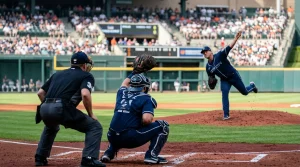


Opening Day is the worst-priced betting card on the entire MLB calendar, and it is also the day where the largest pool of casual UK punters places their first baseball bets of the year. That mix is exactly why I treat it as a sniper exercise. You sit out 90 percent of the slate, identify the two or three games where the market is shaped by recreational money rather than reality, and stake selectively against the public side of the line.
Nine years modelling MLB openers has taught me one thing more than anything else: pre-season certainty is mostly fiction. The first ten days of the season produce the noisiest data the sport offers. UK punters who treat April 1 like a meaningful trading session usually pay for that mistake by mid-May.
Opening Day Card Overview
The 2026 Opening Day card features all 30 MLB clubs in action, with games staggered across the afternoon and evening UK time. The first pitch typically lands in mid-evening Britain time, with the late West Coast games rolling into the small hours. Bet365 and William Hill open their MLB markets to peak depth for the day, with Betfair Exchange reaching its highest single-day non-postseason MLB liquidity of the year.
The 2025 regular season generated a total attendance of 71.4 million, the highest in seven years, and Opening Day is reliably the single biggest in-stadium gate of any non-postseason day on the schedule. That fan demand maps directly onto betting handle. Bookmakers will market the day aggressively with price boosts, free-bet offers and concentrated cross-sell to football customers who do not normally bet baseball. None of that should change how the actual lines are read.
The structural feature of the day worth noting is that nearly every team starts its ace pitcher. That sounds like a clean signal until you remember that every club’s ace was facing every other club’s ace in spring training. The ace-vs-ace matchup, which seems edge-rich, is actually one of the harder spots to find pricing inefficiency, because the bookmakers know the matchup and the public know the matchup, and both sides bake it in.
Ace Pitcher Pricing Noise
Where I do find inefficiency on Opening Day is in second-tier pitching matchups. The marquee names get respected by the line. The number-two and number-three starters in club rotations get priced more on reputation than on form. A starter coming off a strong second half of the previous season, with a pitch-mix change made in spring training that the public has not noticed, often opens his season at a moneyline price that does not reflect his actual stuff.
The other ace-pricing distortion sits on the totals side. UK punters love taking unders on ace-vs-ace matchups, and the public skew on those games tends to drive the total down half a run lower than I think it should be. A 7.5-or-8 totals line where I actually project 8.5 is a textbook over spot, even if the headlines say it is a pitchers’ duel. Aces lose feel for the changeup in a fourth-inning pop-up jam and surrender three runs in fifteen minutes; that has happened on Opening Day every year I have followed the sport.
The cleanest discipline I can offer here is to bet ace games only on totals if you are betting them at all. The moneyline on an ace-vs-ace matchup is too tightly priced to extract value, and the run line is too volatile because both starters tend to leave games early as managers pull them on a strict pitch count.
Pre-Season Form vs Real Data
Spring training stats are not real data. I have to remind myself this every March because the Cactus League and Grapefruit League produce headline numbers that look meaningful: a starter posting a 1.20 ERA in five spring outings, a slugger hitting .400, a closer striking out everyone he faces. None of that survives contact with regular-season pitching depth, MLB-quality umpires, and full-effort lineups.
The signal in spring training is mechanical, not statistical. Pitch-tracking data that shows a new pitch shape, a velocity bump that holds across multiple outings, or a tweaked release point is real and shows up in the regular season. Outcome stats like batting average and strikeouts-per-nine in spring training are noise that the market mostly knows to discount, but recreational money does not always discount it cleanly.
The Opening Day implication is to read each starter’s spring outings on Statcast for shape changes, ignore the ERA, and price the matchup off the underlying stuff. When a club’s number-two starter has clearly added a usable cutter in spring and the moneyline still prices him at his previous-season profile, that is a market lag I am happy to take.
Weather and April Cold Totals
Cold weather hides in the totals line on Opening Day in ways the betting public underestimates. April baseball played in the upper Midwest or in the Northeast at 8:00pm local with a 12-degree Fahrenheit wind chill produces dramatically lower run-scoring environments than the same matchup played in July. Cold air is denser, so balls do not carry. Cold hands grip the bat poorly. Pitchers struggle with grip too, but the hitting suppression typically dominates.
The 2025 season produced an average MLB game time of 2 hours 38 minutes, which is a structural fact about pace. April games run shorter still because cold weather plus the pitch clock plus crisp early-season pitching tends to produce six- and seven-inning starter outings. Shorter games mean fewer plate appearances, which mean fewer chances for runs to materialise. Totals at 7.5 in a 40-degree Cleveland or Detroit Opening Day game are often genuinely too high, even if they look conservatively priced compared to summer numbers.
The tactical move is to identify three or four cold-weather Opening Day games every year and stake on the under at half a percent of bankroll each, treating the slate as a small portfolio rather than a single bet. Hit rate on this play has been comfortably above coin-flip in my records.
Traps on Opening Day
The two traps I see UK punters fall into every year are the same: the cross-sport accumulator and the marquee-name moneyline favourite. The accumulator combines four Opening Day favourites into a single bet, prices it at 5.00 decimal, and inside three hours one of the four has lost in extra innings. The pure-favourite play on a marquee club is similar: short price, no meaningful edge, blown up by one bullpen meltdown.
Avoid both. Stake selectively on totals where the cold-weather signal is real, on second-tier pitcher matchups where market lag exists, and on a small set of underdog moneylines where the spring training stuff signal supports the play. The full framework underpinning that approach lives in the broader strategy framework for MLB, and Opening Day is just an extreme application of it.
Why are Opening Day totals usually too high in cold-weather venues?
Can a UK punter trust spring training stats for opening-day prices?
Material created by the team StitchLine