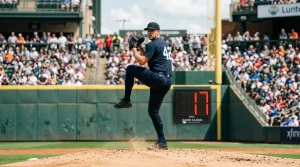


I have a recurring annual debate with myself in mid-July about whether the MLB All-Star Game is worth betting at all. The commissioner’s office has spoken publicly about monitoring the integrity of every part of the game, and that scrutiny extends to exhibition fixtures more than the public assumes. From a punter’s seat, the All-Star Game is a strange beast: a real MLB-branded fixture priced like a real MLB-branded fixture, but played as a glorified showcase where managers pull starters before they break a sweat and bullpen leverage is decided more or less at random.
What I have settled on after nine seasons is that the All-Star Game does carry betting edges, but not in the markets the casuals look at. The moneyline is dead money. The total is unpredictable. The novelty markets, however, are reliably mispriced, and the Home Run Derby side bet is its own separate exercise.
Why ASG Pricing Is Different
The All-Star Game is the one MLB fixture each year where neither manager is trying to win in the way they are trying to win on a regular Tuesday in June. Player safety overrides leverage. A starter typically throws one inning. The closer of the league with home-field advantage that year may not appear at all. Lineups rotate every two innings, with substitutes going in for ceremonial reasons rather than tactical ones. The basic mechanism that produces predictable outcomes during the regular season is missing here.
That should mean bookmakers price the game cautiously. In practice, they do not. Bet365, William Hill and Paddy Power all open the AL-vs-NL moneyline as if it were a normal regular-season interleague game, with the favourite priced around 1.85 and the dog around 1.95. The implied probability difference between those numbers is meaningful in regular-season MLB. In the All-Star Game, where a single inning by a fringe reliever can produce three runs out of nowhere, the actual variance dwarfs that price spread. The bet is not a 53-47 proposition. It is much closer to a 51-49 coin flip.
The smart move is usually to skip the headline market entirely. UK punters who insist on staking it should at least pay attention to which league has home-field advantage and which league has the deeper bullpen pool that year. Even those signals barely move the dial.
MVP and Novelty Props
Where the All-Star Game does offer genuine value is the MVP market. The MLB All-Star Game MVP is awarded to a single player from the winning side, and bookmakers price the market with maybe 30 names on the board. Each name carries a long price, often between 12.00 and 50.00 decimal. The implied probability of any individual player winning is low, but the actual probability is even lower for most of them, and slightly higher for a small set.
The signal worth reading is plate appearances. The MVP is almost always won on offence, and offence requires being on the field for at least three innings with multiple at-bats. The starting lineup carries a clear advantage over the substitutes. Inside the starting lineup, the players hitting one through five take more cuts than six through nine. A starting third hitter on the home-field-advantage side priced at 18.00 is meaningfully better value than a starting eighth hitter on the same side priced at 14.00.
The other novelty market worth looking at is the home-run prop. The 2025 season produced seven players in the 30/30 club for the first time in MLB history, the kind of power explosion that bleeds into All-Star events. Anytime home-run props for established sluggers tend to price slightly long because the bookmakers worry about correlated payouts; the right approach is to compare the All-Star Game home-run prop framework with regular-season pricing covered in HR prop pricing in regular season, and stake the All-Star version when the price drift is more than a tick.
Pitcher Rotation Uncertainty
Pitcher props in the All-Star Game are the worst-priced market the bookmakers offer in any MLB context. The starting pitcher throws one inning, sometimes two. Over-strikeouts at 0.5 or 1.5 strikeouts is a market with a one-inning sample, and one inning is a coin flip. The pitchers who follow the starter are decided by managerial whim and broadcast-friendly rotation: a closer who has not been used in a week may get the eighth inning instead of the ninth, just to give him work.
The 2025 season averaged a game time of 2 hours 38 minutes. The All-Star Game tends to run slightly longer despite its abbreviated structure, because every pitcher change involves a ceremonial mound visit and a broadcast cut to the dugout. None of that ceremony helps a pitcher prop bettor. A starter exits after 11 pitches and the strikeout-prop-over needed two whiffs in those 11 pitches. The math does not favour the bettor.
The rule I apply is the simplest one I have: do not bet pitcher props in the All-Star Game. The variance is too high, the sample too small, and the pricing assumes a usage profile that bears no resemblance to how the game is actually managed.
Home Run Derby Side Bet
The Home Run Derby is a different exercise from the All-Star Game itself. It is a head-to-head bracketed competition where eight sluggers face each other in timed home-run rounds. Each round is its own decision, and bookmakers price both the outright winner of the Derby and individual matchup winners.
The matchup market is where I have found edge over the years. Bookmakers tend to anchor the favourite based on regular-season home-run totals, which is the wrong signal. The Derby rewards a specific skill: hitting a stationary pitch from a personal pitcher in a 60-second window, with breaks and re-takes. A slugger with a quick swing and a familiar pitcher beats a slugger with more raw power but a slower mechanical setup. Past Derby form, even in small samples, has predictive value the regular-season home-run totals do not.
Stake size discipline matters here because the variance is enormous. A 30-pitch round that produces 11 home runs versus a 30-pitch round that produces 7 home runs comes down to literal seconds of timing.
Staking Light on the All-Star Game
The All-Star Game is a fixture where I keep total exposure to roughly half what I would risk on a regular-season Tuesday card. The reasons are structural: lower predictability, higher variance, no managerial leverage decisions, and pricing that does not reflect any of that.
Stick to the MVP market with one or two starting-lineup names at long prices, the Home Run Derby matchup props where past Derby form gives a signal, and a single anytime home-run prop on a slugger you have a structural read on. Avoid the moneyline, total, and pitcher props entirely. The All-Star Game rewards selectivity more than any other date on the MLB calendar.
Why are All-Star Game pitcher props poorly priced for the bettor?
Is the Home Run Derby side bet worth more than the All-Star Game itself?
Material created by the team StitchLine