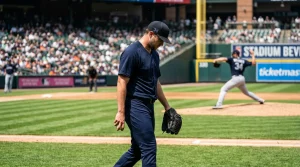

The NRFI is the only MLB market I have ever placed at four in the morning UK time on a phone propped against a glass of water. There is something specific about the first-inning bet – it is over before most of the game has happened, your edge is settled in the first dozen pitches, and the discipline of waiting for the right pitcher matchup is its own betting craft. Nine years modelling baseball, and the first-inning markets remain one of the cleanest places in the sport to extract a small, replicable edge. The bet looks simple – will any run score in the opening frame, yes or no – and the simplicity hides genuine complexity. Dustin Gouker, the gambling industry consultant at Closing Line Consulting, captured the sceptic’s view of micro-prop markets when he asked whether we need to be able to bet on what the next pitch is, whether it’s a ball or strike, arguably not. The first-inning market is the disciplined cousin of those micro-bets, and it is worth treating as a serious analytical product rather than as filler.
NRFI and YRFI in Plain Terms
I learned the acronyms wrong before I learned them right. The first time I saw NRFI on a betslip, I thought it was a typo. NRFI is “No Run First Inning” – a wager that no run will be scored by either team during the opening half-innings of an MLB game. YRFI is the inverse: “Yes Run First Inning” – at least one run will cross the plate before the first inning ends.
The settlement window is short. Both halves of the first inning have to complete for the bet to settle as a winner or a loser, which means a top of the first that ends with the home team scoring before three outs are recorded resolves YRFI immediately. An NRFI bet only settles when the bottom of the first has produced three outs without a run.
The market is binary on outcome but not on probability. A typical MLB first inning produces a run roughly fifty-five per cent of the time across the league, with significant variance by pitcher matchup, lineup quality and venue. That base rate is the start of the analysis, not the end. A pitcher with a sub-2.50 first-inning ERA across a defined sample is an entirely different proposition to one whose first-inning ERA sits at 5.10. The price the bookmaker prints reflects an aggregate model; your job is to find the games where the aggregate is wrong.
Pitcher First-Inning Data and Why It Matters
The single most useful spreadsheet column I keep on baseball is “first-inning ERA across last forty starts.” It tells me whether a pitcher walks into the game cold or hot, whether his fastball plays in the opening frame or whether he needs an inning to find rhythm, and whether managers tend to script his pitch mix differently in the first.
The data divides starting pitchers into three rough buckets. Cold starters have a first-inning ERA noticeably above their full-game ERA – they need an inning to settle, and they bleed runs while they do. Steady starters have a first-inning ERA close to their full-game number – the first frame is statistically indistinguishable from the rest. Hot starters have a first-inning ERA notably below their full-game number – they tend to attack early and dictate the opening half-inning before fatigue or third-time-through penalties catch them.
Two cold starters facing each other usually shifts the implied YRFI probability above sixty per cent. Two hot starters with sub-3.00 first-inning ERAs over a meaningful sample push the implied NRFI probability above fifty-five per cent. Between those poles, the bet is much closer to the toss-up that the public market assumes. The expected MLB game length sits at around two hours and thirty-eight minutes in current data – a function of the pitch clock and the broader pace-of-play reforms – and faster-paced games tend to compress the first inning into a tighter pitch window, which marginally favours pitchers who attack the strike zone early.
Top-of-Order Context and Lineup Construction
Pitching is half the equation. The other half is who walks to the plate. The first inning sees the top three hitters in the lineup guaranteed an at-bat – and possibly the top four, depending on whether the leadoff hitter reaches base.
The relevant lineup metric for first-inning betting is on-base percentage of the top three hitters. A trio that combines for an OBP above .360 is materially more likely to produce a run in the opening frame than a trio that combines for an OBP below .310. The reason is mathematical: even modest on-base improvements at the top of the order produce disproportionate first-inning scoring, because the heart of the order is virtually guaranteed to bat in the first.
The other lineup factor is power concentration. A top three that includes a thirty-home-run threat in the three-hole produces more YRFI runs even when the OBP is moderate, because a single home run from that hitter resolves the market on its own. The seven players the league produced in 2025 with thirty home runs and thirty stolen bases in the same season – a record for one MLB campaign – are precisely the kind of profiles that bend a YRFI line in the favour of “yes.”
Weather and Park Effects in the Opening Frame
I have stopped placing first-inning bets on Coors Field games entirely. The market is too efficient there because everybody knows altitude inflates run scoring. The interesting first-inning bets live in marginal venues where weather pushes a stable line in one direction or the other and the public model has not caught up.
Three patterns matter. First, a wind blowing out at Wrigley or Fenway in summer increases first-inning home-run probability by enough to bend YRFI prices noticeably. Second, a cold-weather April fixture in a domed venue suppresses scoring in the first because hitters are still finding timing – NRFI prices in late March and early April underprice this effect by a small but real margin. Third, an evening game in high humidity at sea level plays slower than the same matchup played on a dry, cool night – humidity reduces the carry on contact, which favours the pitcher in the opening frame before bullpen hands enter.
The pace-of-play reforms have a subtler weather interaction too. In 2025, only three nine-inning MLB games stretched past three hours and thirty minutes, against three hundred and ninety-one such games in 2021. Faster pace means less standing around in the outfield, which marginally affects fatigue patterns through a long game but barely touches the first inning. The first frame is largely insulated from the new tempo because nobody is fatigued yet.
Where the Value Trap Sits
The biggest first-inning trap is over-reacting to one-run-game variance. Roughly thirty per cent of all MLB games are decided by exactly one run, and that variance shows up across innings – including the first. A pitcher who has surrendered first-inning runs in three consecutive starts has not necessarily turned cold. He has likely run into a small sample of bad sequencing, and the next start’s first-inning ERA is more likely to regress towards his career number than to extend the recent trend.
The other trap is over-weighting recent box scores. A starter who threw a hitless first inning last time out is not statistically more likely to repeat that performance than his career first-inning rate suggests. The market overreacts in both directions to the most recent start, and the disciplined first-inning bettor reads the trailing forty-start window rather than the trailing one-start window. That is the same reasoning that sits underneath how to read pitcher ERA in context across longer samples.
The third trap is grinding the market for the sake of activity. Not every game has a workable first-inning edge. A disciplined NRFI/YRFI strategy passes on more bets than it places, and the games it skips are the ones where the price is fair. The hard part of the discipline is not finding the edges; it is sitting out the matchups that lack one.
Why does YRFI seem under-priced when both starters have a high first-inning ERA?
Does an NRFI bet survive if a starter is pulled mid-first inning?
Material created by the team StitchLine